NFL Prediction Markets vs. Traditional Crypto Sportsbooks: How They Compare
 Available in US
A Different Way to Put Crypto Behind an NFL Outcome
The first time I bought shares on a prediction market for an NFL divisional winner, the experience felt closer to trading stocks than placing a bet. There was no odds board, no betslip, no “place bet” button. Instead, I was purchasing contracts at a price that reflected the market’s collective estimate of a team’s probability of winning its division. When the season ended and that team won, each contract paid out at $1.00. The difference between my purchase price and the payout was my profit.
Prediction markets have existed in various forms for decades, but the combination of blockchain settlement and crypto-native infrastructure has made them accessible to a wider audience than ever before. For NFL bettors accustomed to traditional sportsbooks — including crypto sportsbooks — prediction markets offer a structurally different product with distinct advantages and limitations. Crypto platforms now handle roughly 17% of all global iGaming volume, and prediction markets represent a growing slice of that activity.
Prediction Markets Mechanics: Shares, Not Odds
The fundamental difference between a prediction market and a sportsbook is the pricing mechanism. A sportsbook sets odds using its own model and adjusts them based on the action it receives. A prediction market allows participants to buy and sell shares — binary contracts that pay a fixed amount if an event occurs and nothing if it does not.
Imagine a market on whether the Kansas City Chiefs will win the Super Bowl. On a prediction market, you might see “Yes” shares trading at $0.18 and “No” shares trading at $0.82. If you buy a “Yes” share at $0.18 and the Chiefs win the Super Bowl, your share settles at $1.00 and you profit $0.82 per share — equivalent to decimal odds of approximately 5.56. If they do not win, your share settles at $0.00 and you lose your $0.18 investment.
The price of each share moves in real time as participants trade. If new information emerges — a key injury, a blockbuster trade, a dominant playoff performance — the price adjusts as buyers and sellers react. There is no sportsbook in the middle setting the line. The price is the consensus of everyone trading in that market, weighted by the capital they commit.
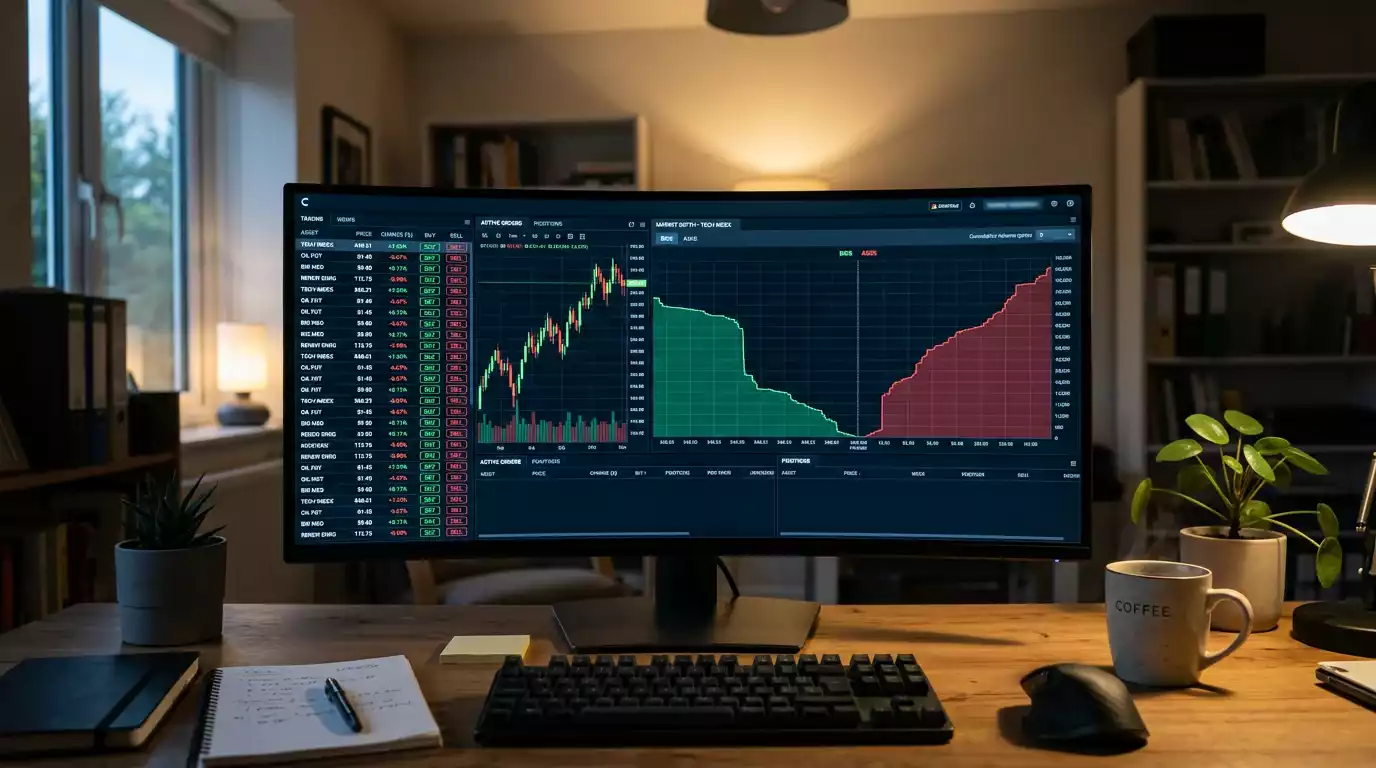
This peer-to-peer structure means there is no built-in vig or margin in the same way a sportsbook embeds its profit into the odds. The market’s cost comes from the spread between the buy price and the sell price — the bid-ask spread — and from any fees the platform charges on trades or settlements. On liquid markets, these costs can be lower than a traditional sportsbook’s margin. On illiquid markets, they can be higher.
Prediction Markets vs. Sportsbooks: Odds, Liquidity, and Limits
The practical differences between prediction markets and crypto sportsbooks matter more than the theoretical ones. Here is how they stack up across the dimensions that affect your NFL betting experience.
On odds quality, prediction markets can offer better prices than sportsbooks on high-profile NFL events — Super Bowl winner, conference champions, MVP — because the peer-to-peer model eliminates the sportsbook’s margin. For a well-traded Super Bowl market, the effective margin embedded in the bid-ask spread might be 1% to 2%, compared to 4% to 8% on a typical crypto sportsbook. However, this advantage evaporates on less liquid markets. A regular-season game total or a player prop on a prediction market might have a wide spread or insufficient volume to fill your order at a reasonable price.
Liquidity is the critical differentiator. Crypto sportsbooks guarantee execution — you click a price, your bet is placed at that price. Prediction markets operate as order books. If nobody is willing to sell you “Chiefs to win” shares at $0.18, you either wait or pay a higher price. For NFL futures and major event markets, liquidity is generally adequate. For weekly game markets, player props, or in-play betting, prediction markets typically lack the depth to compete with established sportsbooks.
Market variety favours sportsbooks overwhelmingly. A crypto sportsbook might offer 200 markets on a single NFL game — spreads, totals, moneylines, player props, game props, and same-game parlays. A prediction market for that same game might offer three to five binary questions: who wins, will the total be over or under a fixed number, and perhaps one or two player-related markets. If you want to bet on a tight end’s reception total or the number of sacks in the first half, a sportsbook is your only option.
UKGC Executive Director Tim Miller has described innovation as one of the Commission’s central consumer protection tools when it comes to the illegal market. Prediction markets represent exactly the kind of structural innovation that could reshape how regulated gambling operates — transparent pricing, blockchain settlement, no single point of failure — but they remain outside the UK’s regulated framework for now.
Can UK Bettors Use NFL Prediction Markets?
The regulatory position for UK residents using prediction markets is murky. Most blockchain-based prediction markets operate without a UK gambling licence. The UKGC does not explicitly address prediction markets in its guidance, partly because the products have grown faster than the regulatory framework can accommodate.
The UK’s Financial Conduct Authority is implementing a comprehensive cryptoasset regulatory framework with an expected effective date of 25 October 2027. How this framework treats prediction market contracts — as gambling products, financial instruments, or something else entirely — will determine whether UK residents can use them within a regulated environment. If prediction market contracts are classified as regulated financial instruments, they would fall under FCA jurisdiction rather than the UKGC. If they are classified as gambling products, they would require a UKGC licence to legally offer to UK consumers.
In the meantime, UK bettors who use offshore prediction markets face the same risks as those who use unlicensed crypto sportsbooks: no consumer protection, no dispute resolution mechanism, no recourse if the platform shuts down or refuses to honour a payout. The technology is compelling, but the regulatory guardrails that protect users are absent.
Frequently Asked Questions
Is Polymarket legal for UK users to bet on the NFL?
Polymarket and similar blockchain-based prediction markets generally do not hold UK gambling licences and have, at various points, restricted access for users in certain jurisdictions. UK bettors should check the platform’s current terms of service and be aware that using unlicensed gambling products carries risks including loss of funds with no regulatory recourse.
How does liquidity on NFL prediction markets compare to traditional sportsbooks?
For major NFL events like the Super Bowl, conference championships, and MVP markets, prediction market liquidity can be substantial. For regular-season games, player props, and in-play markets, liquidity is typically thin compared to established crypto sportsbooks. Low liquidity means wider bid-ask spreads and potentially slower order execution.
Can I use prediction market odds to find value on traditional crypto sportsbooks?
Yes. Prediction market prices represent crowd-sourced probability estimates that are often well-calibrated on liquid markets. Comparing a prediction market’s implied probability for an NFL outcome with a sportsbook’s odds can reveal discrepancies — situations where the sportsbook’s price implies a lower probability than the prediction market consensus, or vice versa. This cross-referencing is a useful analytical tool even if you place your actual bets on a sportsbook.
Complementary Tools, Not Direct Replacements
Prediction markets and crypto sportsbooks serve different needs within the NFL betting ecosystem. Sportsbooks offer breadth — hundreds of markets per game, in-play betting, prop menus, and same-game parlays. Prediction markets offer transparency — peer-to-peer pricing, blockchain settlement, and potentially tighter margins on high-profile events.
For UK NFL bettors, sportsbooks remain the practical choice for weekly game betting and the depth of markets that a full season demands. Prediction markets are best used as a complementary analytical tool — checking consensus probabilities, identifying price discrepancies, and occasionally taking a position on a futures market where the liquidity and pricing justify it. The two products are not competitors. They are different instruments in the same toolbox.
Created by the ”Best nfl Crypto Betting” editorial team.