Stablecoin Gambling Regulation in the UK: Where USDT Fits in the UKGC–FCA Framework
 Available in US
Table of Contents
- Stablecoins Dominate Crypto Gambling — But the UK Has No Rules for Them Yet
- 70% and Growing: Stablecoins in Global Crypto Betting
- How the FCA Cryptoasset Regime Classifies Stablecoins
- UKGC Position on Stablecoin Payments for Licensed Gambling
- Frequently Asked Questions
- The Stablecoin Bridge Between Crypto and Regulation
Stablecoins Dominate Crypto Gambling — But the UK Has No Rules for Them Yet
The first time I deposited USDT at a crypto sportsbook, I felt like I was cheating. No Bitcoin volatility risk, no waiting for block confirmations, no mental maths converting satoshis to pounds. I sent $200 in Tether, it arrived in 30 seconds, and it stayed worth $200 while I spent an hour studying NFL lines before placing a single bet. That simplicity is why stablecoins are quietly overtaking volatile cryptocurrencies as the default deposit method on crypto betting platforms — and why their unregulated status in the UK creates a regulatory contradiction that nobody has resolved.
Stablecoins are projected to account for more than 70% of all crypto wagers by 2026, up from an already dominant share. They combine the technological advantages of cryptocurrency — speed, privacy, cross-border settlement — with the price stability of fiat currency. For NFL bettors, that means your deposit does not lose 8% of its value overnight because Bitcoin dropped. Yet the UK’s regulatory apparatus treats stablecoins no differently from the most volatile memecoin — which is to say, it barely treats them at all.
70% and Growing: Stablecoins in Global Crypto Betting
The shift toward stablecoins in crypto gambling is structural, not incidental. Bitcoin still accounts for 66% of total crypto gambling volume when measured by transaction count, but that figure is inflated by Bitcoin’s dominance in older platforms and legacy deposit flows. On newer platforms and among newer users, stablecoins — primarily USDT (Tether) and USDC (Circle) — have become the default.
The reason is straightforward. A bettor who deposits 0.05 BTC on Monday and wants to withdraw on Thursday is exposed to whatever Bitcoin’s price does during those three days. If BTC drops 5%, their winning bets are worth 5% less in fiat terms than the calculations suggested at the time of placement. Stablecoins eliminate that variable. A $500 USDT deposit is worth $500 on Monday, Thursday, and any other day — within the narrow peg tolerance that stablecoins maintain.
Ethereum handles approximately 9% of crypto gambling volume, but a significant portion of that flows through ERC-20 stablecoin tokens rather than native ETH. The practical reality on most crypto sportsbooks in 2026 is that the majority of deposits and withdrawals — by value if not by transaction count — are denominated in USDT or USDC. The infrastructure has followed: Tron-based USDT transfers, which cost fractions of a penny and settle in seconds, have become the default deposit method on platforms serving high-volume bettors.
How the FCA Cryptoasset Regime Classifies Stablecoins
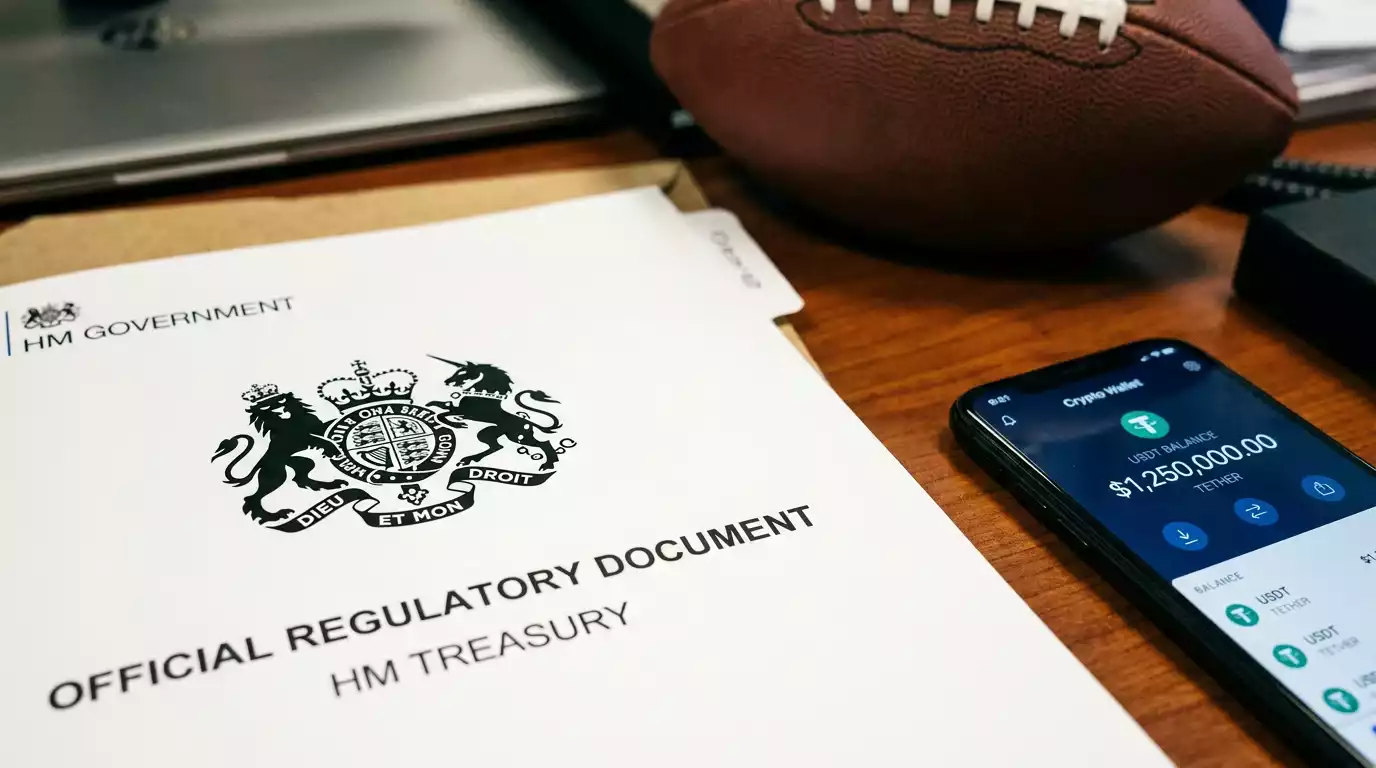
The Financial Conduct Authority’s forthcoming cryptoasset framework, expected to take effect on 25 October 2027, will bring stablecoins into a formal regulatory classification for the first time in the UK. Under the proposed regime, fiat-backed stablecoins like USDT and USDC would likely be classified as “fiat-backed stablecoins” or potentially as “e-money tokens” — categories that carry specific requirements around reserve backing, redemption rights, and issuer authorisation.
The distinction matters for gambling because different classifications trigger different regulatory consequences. If USDT is classified as an e-money token, it could theoretically fall under the same payment processing rules as prepaid cards and e-wallets — instruments that UKGC-licensed operators already accept. If it is classified more broadly as a cryptoasset, it remains in the same regulatory bucket as Bitcoin and Ethereum, subject to whatever blanket treatment the UKGC applies to cryptocurrencies.
The FCA’s consultation papers suggest that stablecoins with adequate reserve backing and transparent redemption mechanisms will receive a more favourable classification than volatile cryptoassets. This creates a potential pathway where stablecoins could be permitted as payment methods on UKGC-licensed gambling platforms before — or without — Bitcoin and Ethereum receiving the same treatment. The logic is consistent: a dollar-pegged token with auditable reserves presents different consumer risk than a volatile asset whose value can halve in a month.
However, USDT specifically faces scrutiny. Tether’s reserve composition has been questioned by regulators globally, and the FCA’s framework may impose reserve transparency requirements that Tether in its current form does not satisfy. USDC, issued by the US-regulated Circle, may find an easier path to UK regulatory acceptance. For NFL bettors whose primary stablecoin is USDT, this distinction could determine which stablecoins are eventually accepted by licensed UK platforms and which are not.
UKGC Position on Stablecoin Payments for Licensed Gambling
The UKGC’s current position is that no cryptocurrency — including stablecoins — is accepted as a payment method on UKGC-licensed gambling platforms. This is a blanket prohibition that does not differentiate between Bitcoin, Ethereum, USDT, or any other digital asset. The Commission’s reasoning, articulated through public statements rather than formal guidance, centres on anti-money-laundering concerns, the absence of a UK regulatory framework for cryptoassets, and the difficulty of conducting affordability checks when deposits arrive via blockchain rather than the banking system.
Tim Miller, the UKGC’s executive director, signalled a potential shift in February 2026 when he stated that the Commission is “exploring the art of the possible” regarding innovation in the gambling sector. While he did not mention stablecoins specifically, the phrasing indicated that the Commission’s position is evolving from outright exclusion toward a more nuanced assessment of different cryptoasset categories.
The stablecoin case is arguably the UKGC’s simplest on-ramp. Unlike Bitcoin, where price volatility complicates affordability assessments and responsible gambling interventions, a USDT deposit of $500 is worth approximately $500 throughout its lifecycle. Source-of-funds checks are complicated by blockchain pseudonymity regardless of the asset type, but stablecoins remove the volatility variable that makes Bitcoin deposits particularly challenging for compliance teams. A licensed bookmaker that accepted USDC deposits via a regulated custodian could apply the same affordability and AML checks it applies to e-wallet deposits, with minimal technical adaptation.
The strategic question is whether the UKGC will wait for the FCA’s October 2027 framework to be fully implemented before acting, or whether it will issue interim guidance that permits stablecoin payments on licensed platforms under specific conditions. The illegal crypto gambling market has grown from 2% to 9% of the UK online betting market in four years, and stablecoins are a primary deposit method on unlicensed platforms. Every month the UKGC delays stablecoin acceptance is another month that demand flows to the unregulated market.
Frequently Asked Questions
Will USDT be classified as an e-money token under UK FCA rules?
The FCA has not made a final determination. Under the proposed cryptoasset framework expected to take effect on 25 October 2027, fiat-backed stablecoins like USDT may be classified as e-money tokens if they meet specific requirements around reserve transparency and redemption rights. However, Tether’s reserve composition has faced regulatory scrutiny globally, and it may not satisfy the FCA’s criteria without changes to its disclosure practices.
Could UKGC-licensed bookmakers accept stablecoins before volatile cryptos?
It is plausible. Stablecoins present fewer compliance challenges than volatile cryptoassets because their value is relatively predictable, simplifying affordability assessments and responsible gambling monitoring. The UKGC could theoretically permit stablecoin deposits on licensed platforms as a first step while continuing to evaluate Bitcoin and Ethereum separately.
Does the FCA October 2027 deadline apply specifically to stablecoins used for gambling?
The FCA’s cryptoasset framework applies broadly to all regulated cryptoasset activities in the UK, not specifically to gambling. However, once stablecoins are formally classified and regulated by the FCA, the UKGC will have a clearer legal basis for determining whether and how they can be accepted as payment methods on licensed gambling platforms.
The Stablecoin Bridge Between Crypto and Regulation
Stablecoins are not a niche product within crypto gambling — they are the dominant deposit method on the fastest-growing segment of the market. Their price stability, low transaction costs, and functional similarity to fiat currency make them the most natural candidate for regulatory integration into the licensed UK gambling ecosystem.
The question is timing. The FCA framework arrives in October 2027. The UKGC is exploring innovation. The illegal market is growing. Somewhere between those three facts lies the moment when a UKGC-licensed operator accepts its first stablecoin deposit — and the regulatory timeline that has been building toward that moment is worth watching closely if you are a UK bettor whose primary deposit method is USDT.
Written by the editors at Best nfl Crypto Betting.