Crypto Sportsbook Security for NFL Bettors: Beyond SSL and 2FA
 Available in US
Every Sportsbook Claims Security — Here Is How to Verify It
I have lost money to a crypto sportsbook exactly once. Not because of a bad bet — because the platform vanished. One morning the site was live, my balance showed 0.14 BTC, and by that evening the domain returned a blank page. No announcement, no email, no forwarding address. That was in 2019, and the lesson reshaped how I evaluate every platform I have used since. The global crypto gambling market processed approximately $81 billion in 2025, and the value sitting in user accounts across these platforms makes them attractive targets for both external attackers and internal fraud.
Every crypto sportsbook advertises security. SSL encryption, two-factor authentication, and “industry-leading protection” appear on landing pages like furniture in a show home. But security is not a marketing badge — it is an architecture. And verifying it requires looking past the landing page at the structures that actually protect your funds.
Cold Storage and Proof of Reserves
The most important security question for any crypto sportsbook is simple: where are the funds? A platform that holds the majority of user deposits in hot wallets — wallets connected to the internet for immediate transaction processing — exposes those funds to every network-facing vulnerability the platform has. A compromise of a hot wallet is a compromise of the funds inside it.
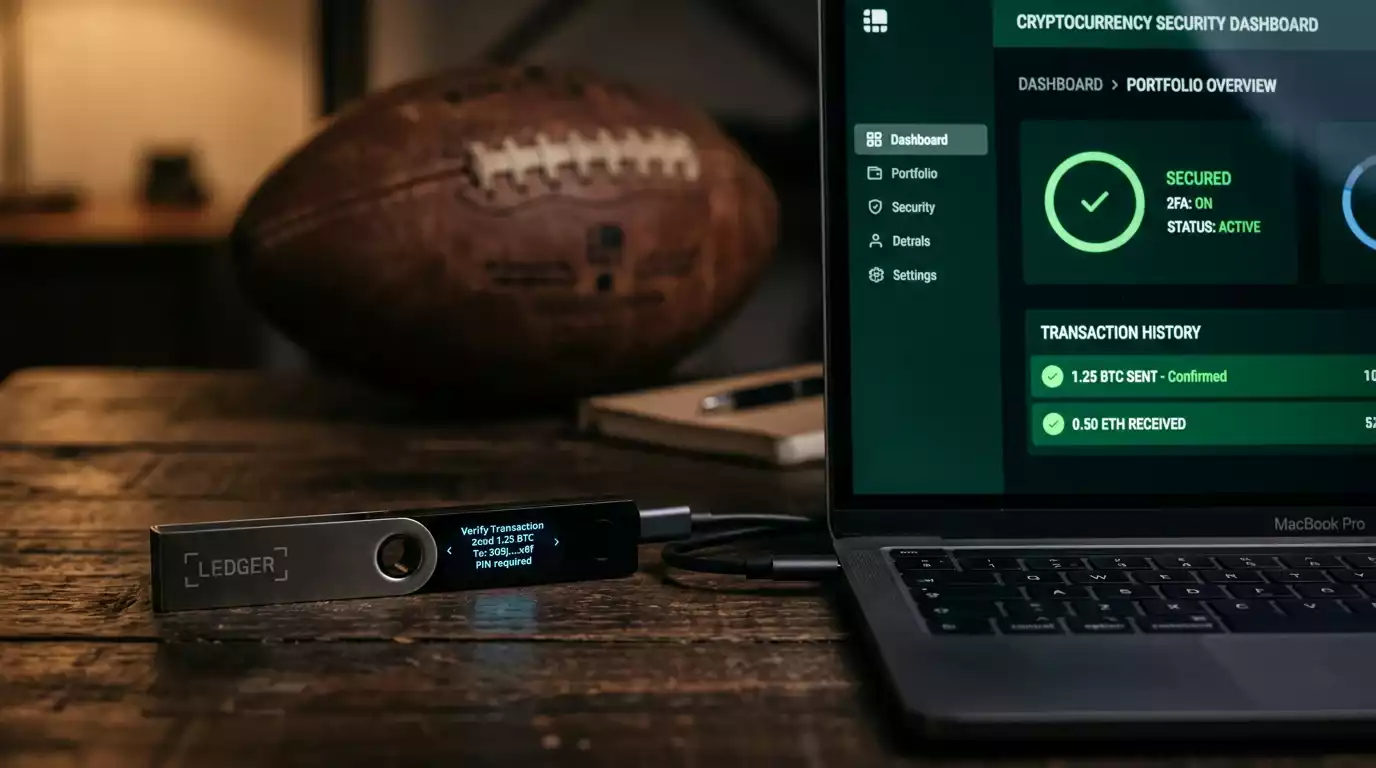
Best practice in the crypto industry is cold storage: holding the bulk of reserves in wallets that are not connected to any network. Hot wallets should contain only the liquidity needed to process withdrawals within a reasonable window — typically 24 to 48 hours of average withdrawal volume. Everything else sits offline, accessible only through multi-signature authorisation processes that require physical access to hardware devices.
Proof of reserves — a mechanism where a platform publishes cryptographic evidence that its on-chain holdings match or exceed its total user balances — is the verification layer. Crypto platforms now account for roughly 17% of all iGaming wagers globally, and the platforms that publish regular proof-of-reserve attestations are making a verifiable claim about solvency that unpublished competitors are not. If your sportsbook cannot point you to a proof-of-reserves audit, ask yourself what that silence communicates.
Checking is not difficult. Some sportsbooks publish reserve addresses directly on their transparency pages. You can verify the balance of any public blockchain address using a block explorer. If the published addresses hold substantially less than the platform’s claimed user deposits, you have your answer before you deposit a single satoshi.
2FA, Withdrawal Whitelisting, and Session Controls
Two-factor authentication is the baseline, not the ceiling. App-based 2FA — Google Authenticator, Authy, or similar — generates time-based codes that an attacker cannot intercept remotely. SMS-based 2FA is better than nothing but vulnerable to SIM-swapping attacks, where an attacker convinces your mobile carrier to transfer your number to a new SIM. If your sportsbook offers app-based 2FA, enable it. If it only offers SMS, use it while understanding its limitations.
Withdrawal whitelisting is the second lock. When enabled, your sportsbook will only process withdrawals to wallet addresses you have pre-approved. Adding a new address to the whitelist typically requires a waiting period of 24 to 48 hours, during which you receive notifications and can cancel if you did not initiate the request. Even if an attacker bypasses your password and your 2FA, they cannot redirect your funds to an unwhitelisted address.
Session management is an overlooked practice. Most crypto sportsbooks maintain active login sessions until you explicitly log out or the session expires. If you log in from a shared or public device and forget to log out, anyone with physical access can access your account. Log out after every session. Check your sportsbook’s active sessions list and terminate any you do not recognise. Use a dedicated browser or browser profile for sportsbook activity to reduce the risk of credential leakage through browser extensions or shared profiles.
Password hygiene underpins everything. A unique, complex password for every sportsbook account, generated and stored by a password manager, eliminates the risk of credential-stuffing attacks where passwords leaked from other services are tested against your sportsbook login.
Fund Segregation and What Happens If a Sportsbook Fails
Fund segregation is the structural safeguard that determines whether your balance survives a platform failure. A sportsbook that segregates player funds — holding them in accounts or wallets separate from the company’s operational funds — provides a layer of protection if the business becomes insolvent. Your money is not mixed with the company’s payroll, marketing budget, or executive bonuses.
UKGC-licensed operators are required to segregate player funds or hold them in a trust arrangement. Offshore crypto sportsbooks face no equivalent obligation. Some do it voluntarily; many do not. During the 2025-2026 financial year, the UKGC issued 741 cease-and-desist orders to unlicensed operators — a reminder that platforms operating outside regulated frameworks can and do disappear. When an unsegregated sportsbook fails, user balances become general creditor claims in a jurisdiction you may have no practical access to. Recovery is theoretical at best.
Before depositing any meaningful amount, look for a platform’s statement on fund segregation. If the sportsbook’s terms of service state that user funds may be used for operational purposes, you are lending the company your money on terms you did not negotiate. If there is no statement at all, assume the worst.
Frequently Asked Questions
How can I check whether a crypto sportsbook stores NFL bettor funds in cold wallets?
Look for a transparency or security page on the sportsbook’s website that lists cold storage wallet addresses. Verify the balances of those addresses using a public block explorer for the relevant blockchain. If the platform does not publish wallet addresses or proof-of-reserves data, there is no way to independently verify their cold storage claims.
What is withdrawal whitelisting and should I enable it for NFL betting?
Withdrawal whitelisting restricts your sportsbook account to only process withdrawals to wallet addresses you have pre-approved. Adding a new address requires a waiting period, typically 24 to 48 hours. This prevents an attacker who gains account access from immediately withdrawing your funds to their own wallet. Enable it on every platform that offers it.
Has any major crypto sportsbook experienced a security breach affecting NFL bettors?
Several crypto gambling platforms have experienced security incidents, including hot wallet compromises and internal fraud. Specific NFL bettor impact is rarely disclosed separately from general platform breaches. The risk is real and ongoing — which is why verifying a platform’s security architecture before depositing is essential rather than optional.
Security Is a Checklist, Not a Checkbox
A secure crypto sportsbook is not one that ticks a single box — it is one that implements layers. Cold storage for the majority of funds. Proof of reserves you can verify. App-based 2FA. Withdrawal whitelisting. Session controls. Fund segregation. Each layer compensates for the potential failure of another.
The five minutes it takes to verify these features before depositing is the best risk-adjusted investment you will make in your entire NFL crypto betting season. I learned that lesson at the cost of 0.14 BTC in 2019. You can learn it by checking a platform’s licensing and security credentials before your first deposit instead.
Written by the editors at Best nfl Crypto Betting.