Bitcoin NFL Live Betting: In-Play Speed and Platform Limits
 Available in US
Table of Contents
- In-Play Betting Speeds and Blockchain Confirmation Times
- The Scale of NFL In-Play Betting
- Blockchain Confirmation vs. Line Movement: The Core Tension
- Pre-Funded Wallets: How Crypto Sportsbooks Solve Latency
- In-Play Strategies That Suit Crypto NFL Bettors
- What to Look for in a Live Crypto NFL Sportsbook
- Frequently Asked Questions
- Speed as a Skill, Not Just a Feature
In-Play Betting Speeds and Blockchain Confirmation Times
It was a Sunday Night Football game, Eagles at Cowboys, and I spotted value the moment Dallas fumbled on their own 30. The live spread shifted two points in Philadelphia’s favour within seconds. I tapped the bet on my crypto sportsbook, confirmed the transaction, and waited. The blockchain confirmation took 40 seconds. By the time my USDT deposit registered, the line had moved again. I got a worse number than what I’d clicked. In live NFL betting, 40 seconds is a geological epoch.
Live betting – placing wagers while a game is in progress – accounts for 53.4% of all online sports betting activity globally as of early 2026, with a projected growth rate of 14.85% annually through 2031. It’s not a niche anymore. It’s the majority of the market. And for crypto bettors, it presents a unique paradox: the technology that makes deposits faster than bank transfers can also be too slow for a market that reprices every time a quarterback drops back to pass.
This article addresses the specific challenges and opportunities of live NFL betting with cryptocurrency. Not the marketing-speak version where everything is instant and seamless. The real version, where blockchain latency meets line movement, and where the bettors who succeed are the ones who understand the mechanics well enough to use them rather than be used by them.
The Scale of NFL In-Play Betting
Three numbers frame the scale of what we’re discussing. The NFL’s regular season averaged 18.7 million viewers per game in 2025, a 10% increase over the prior year. Bettors in states with legal wagering watch approximately 19 more NFL games per season than non-bettors – live betting turns casual viewers into committed ones. And 60% of American bettors wager on football (NFL and college combined), making it the most-bet sport in the world’s largest legal betting market.
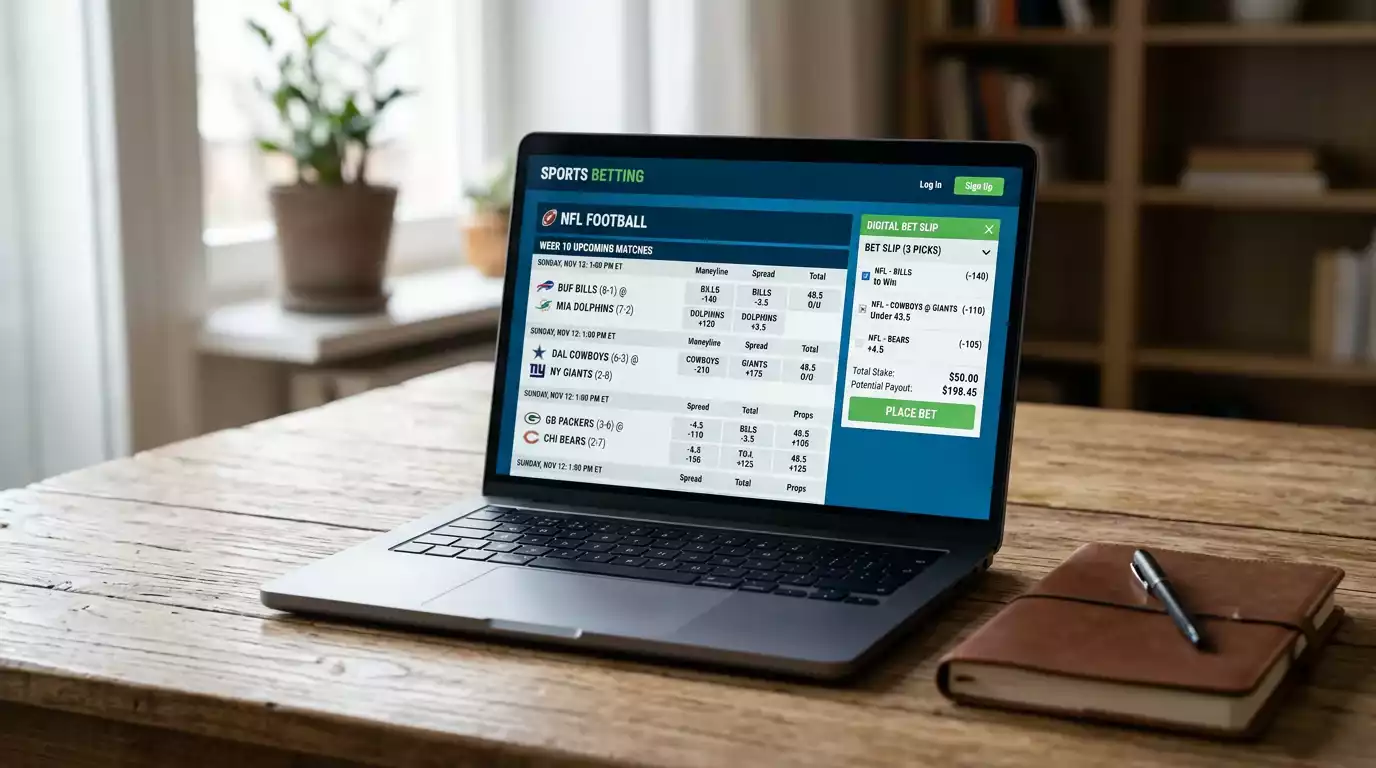
The in-play segment of that market has grown faster than any other bet type. A decade ago, live betting was a novelty – a handful of adjusted spreads and totals offered during commercial breaks. Now, crypto sportsbooks list hundreds of in-play markets for a single NFL game. You can bet on the result of the next drive, the next play, whether the upcoming third-down conversion will succeed, the method of the next score, and dozens of player-specific propositions that reset after every snap.
For UK bettors, the NFL’s broadcast schedule creates an interesting live-betting dynamic. Sunday afternoon games in the US kick off at 6pm and 9.25pm UK time. Sunday Night Football starts after midnight. Monday Night Football runs from around 1.15am Tuesday morning. The late-night schedule means less market competition from casual bettors, which can translate to slightly softer lines on some in-play markets. The trade-off is that you’re making betting decisions at 2am – a timing dynamic that interacts with fatigue and impulsivity in ways worth acknowledging.
The sheer volume of in-play opportunities across a full NFL Sunday is staggering. With up to 14 games running across the early and late windows, and each game generating continuous live markets, a crypto bettor with a pre-funded sportsbook balance has access to hundreds of simultaneous betting opportunities. The question isn’t whether live markets exist. It’s whether you can navigate them at the speed the medium demands.
The appeal for crypto bettors specifically lies in the absence of friction at the operational level. On a UKGC-licensed bookmaker, withdrawing winnings from a Monday night live bet might take two to five business days via bank transfer. On a crypto sportsbook, you can withdraw your Monday night profits to your personal wallet by Tuesday morning. That faster capital cycle matters when you’re betting weekly throughout a 23-week season (including playoffs). Money sitting in a sportsbook’s bank processing queue is money that isn’t earning, isn’t compounding, and isn’t under your control.
Blockchain Confirmation vs. Line Movement: The Core Tension
Here’s the central tension that every crypto live bettor needs to internalise: blockchains are designed for security and finality. Live betting markets are designed for speed and fluidity. These two design philosophies don’t naturally align.
A Bitcoin transaction on the base layer takes an average of 10 minutes per confirmation. Most sportsbooks require at least one confirmation before crediting a deposit. During that 10-minute window, an NFL game can produce two or three possessions, a turnover, a scoring play, and a complete reshuffling of the live betting lines. The spread you wanted when you initiated the deposit might not exist when your funds arrive. David Wells, the former Tether compliance chief, has noted that offshore gaming will stick with USDT until a central-bank digital currency offers 24/7 finality – a statement that acknowledges the structural mismatch between blockchain settlement times and the real-time demands of live wagering.
Faster networks reduce the gap but don’t eliminate it. USDT on TRON confirms in under a minute. Solana settles in seconds. Even Litecoin’s 2.5-minute block time is fast enough for most pre-game deposits. But live betting operates on a different timescale. Lines can move in the time it takes to unlock your phone. A 30-second blockchain confirmation is irrelevant if the line moved 15 seconds ago.
The mismatch creates an asymmetry that favours the sportsbook. When you place a live bet, the platform knows the current line, the current game state, and the current momentum. If your bet request arrives a few seconds after a significant play, the sportsbook can reject it, offer you a worse number, or accept it at the old line depending on which outcome benefits them. On regulated platforms (UKGC-licensed bookmakers), rules govern how in-play bets must be processed. On offshore crypto sportsbooks, the house sets the rules.
This is where the distinction between blockchain speed and betting speed becomes critical to understand. When crypto advocates talk about speed, they mean settlement speed – how fast your money moves from one address to another. When live bettors talk about speed, they mean execution speed – how fast your bet is confirmed at the price you selected. These are entirely different metrics, and confusing them is the most common mistake new crypto bettors make when entering live NFL markets.
None of this makes live crypto betting impossible. It makes it different from pre-game betting in ways that require a different approach. The solution isn’t faster blockchains – it’s a different operational model entirely.
Pre-Funded Wallets: How Crypto Sportsbooks Solve Latency
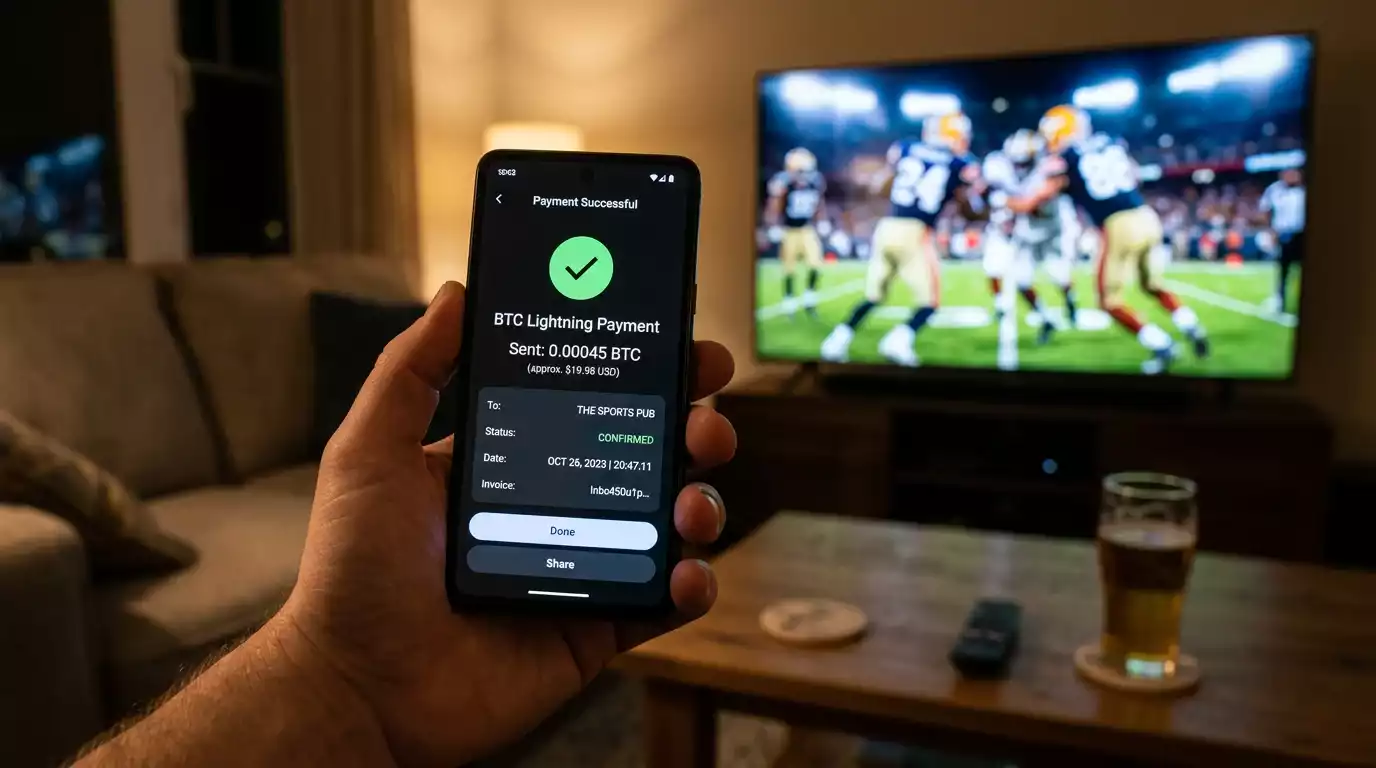
The crypto sportsbook industry solved the live-betting latency problem years ago, and the solution is so simple it barely qualifies as innovation: pre-funded wallets. You deposit crypto into your sportsbook account before the game starts. The platform converts it to an internal balance – denominated in USD, GBP, or the original crypto depending on the platform. When you place a live bet, the transaction happens within the sportsbook’s own database. No blockchain involved. No confirmation wait. The bet processes at the speed of a database write, which is effectively instant.
This model is how every modern crypto sportsbook handles live betting. You’re not sending Bitcoin to the sportsbook each time you click a bet. You sent it once, before kickoff, and now you’re betting from an internal credit. The blockchain interaction happened during the deposit phase. The in-play phase is entirely off-chain.
The practical implication is that live crypto NFL betting doesn’t actually involve blockchain speed at all – except at the endpoints. Deposit before the game. Bet during the game using your pre-funded balance. Withdraw after the game (or after the season, or whenever you choose). The only moments where blockchain confirmation times matter are the first and last steps. The in-play betting itself runs on traditional server infrastructure, just like a fiat sportsbook.
This means the preparation happens before kickoff, not during it. I fund my sportsbook accounts on Friday or Saturday for the Sunday slate. The deposit has six to twelve confirmations by game time regardless of which blockchain I used. My in-play balance is ready, and every live bet executes at the same speed as it would on a fiat platform. The bettors who struggle with crypto live betting are almost always the ones trying to deposit during the game – reacting to a first-quarter fumble by rushing to fund their account. That’s where the latency hits.
One caveat: because your funds sit on the sportsbook’s infrastructure between deposit and withdrawal, you’re trusting the operator with custody. The security considerations I’d apply to choosing any crypto sportsbook – licensing, fund segregation, withdrawal history – become more important when you’re holding a balance over extended periods rather than depositing and withdrawing within hours.
There’s another dimension worth understanding: bet acceptance policies during live play. Some crypto sportsbooks guarantee acceptance at the displayed price for a short window (typically one to three seconds). Others use a “better price or reject” model where your bet is only accepted if the line hasn’t moved against the sportsbook since you clicked. A third category uses a sliding acceptance model – your bet goes through at whatever the current price is when the server processes it, which might be better or worse than what you saw. Knowing which model your platform uses before you start live betting on a Thursday Night Football game is essential. Discovering it mid-game, when a bet you thought was confirmed comes back rejected, is an expensive way to learn.
In-Play Strategies That Suit Crypto NFL Bettors
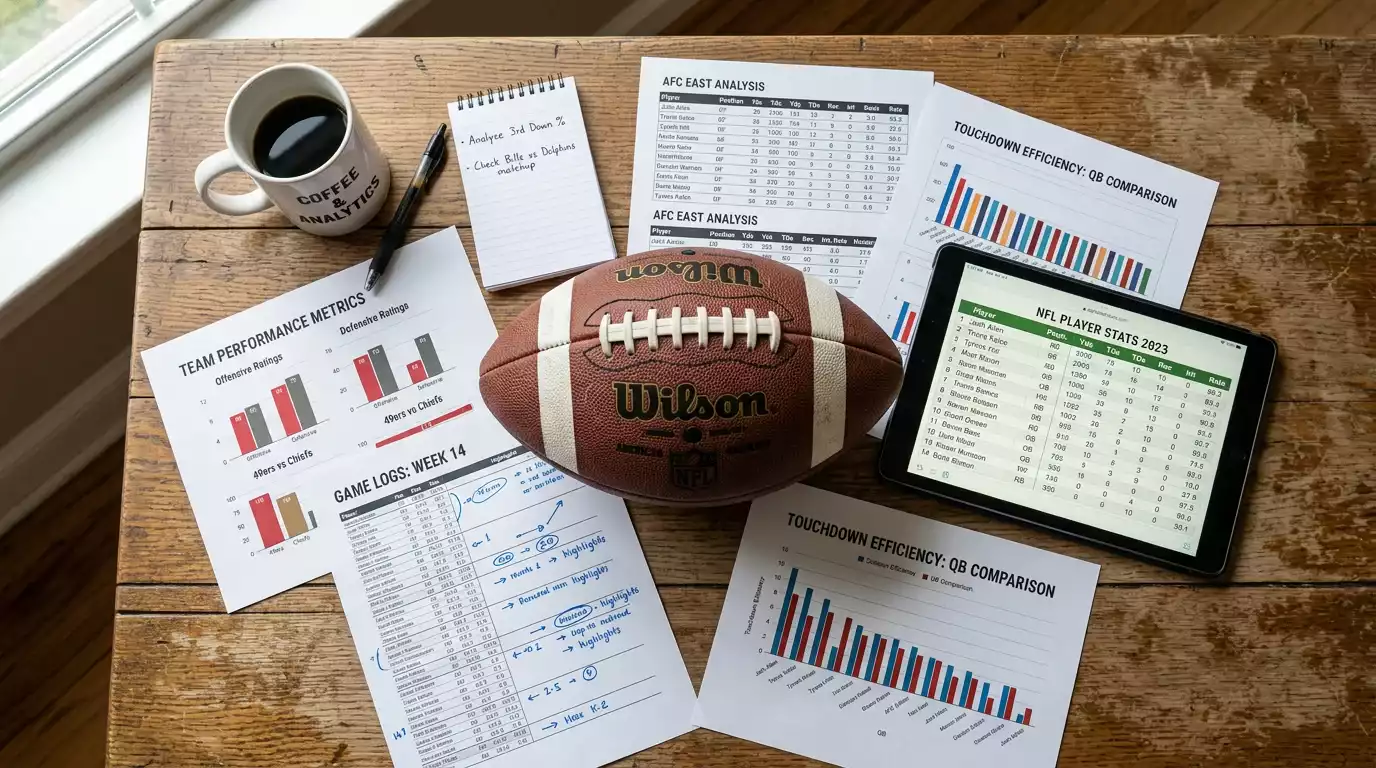
Live NFL betting rewards a different skill set than pre-game wagering. Before kickoff, you’re analysing matchups, studying injury reports, and evaluating market efficiency at leisure. During the game, you’re reading momentum, game flow, and the emotional overreactions of the betting market in real time. The bettors who profit from in-play markets are typically those who understand when the market is wrong, not just when a team is winning.
The most consistently profitable live-betting approach I’ve used across NFL seasons is what I call the “overreaction fade.” The principle is simple: the live market overreacts to scoring plays and underreacts to game-state fundamentals. When a team scores a touchdown to take a 14-0 lead in the first quarter, the live spread shifts dramatically – often more than the scoring margin justifies based on historical win-probability models. If the trailing team has the stronger underlying profile (better quarterback, stronger offensive line, favourable matchup in the secondary), the adjusted live spread can offer value that didn’t exist before kickoff.
A second approach suits bettors comfortable with player proposition markets. Live player props – will a quarterback throw an interception, will a running back reach 75 rushing yards, will a receiver record a touchdown – reset based on game flow. If a team falls behind early and is forced to abandon the run, live passing props for the trailing team’s quarterback adjust upward. But the adjustment often lags the tactical shift. A quarterback who’s thrown 15 passes in the first half because his team was leading might throw 30 in the second half because his team is now trailing. The live market takes time to fully price in that volume shift.
Halftime betting deserves specific mention. The NFL halftime break lasts roughly 20 minutes (longer during the Super Bowl), and many crypto sportsbooks offer a full reset of markets for the second half. Halftime lines are priced on first-half performance, but the correlation between first-half and second-half outcomes in the NFL is weaker than most bettors assume. Coaching adjustments, weather changes, and fatigue patterns make the second half a partially independent event. If you’ve been watching the game and have a thesis on how the second half will differ, halftime is the window to act on it.
The discipline component is non-negotiable. Live betting’s continuous availability is designed to generate volume, and volume benefits the house. I limit myself to a maximum of three live bets per game, each requiring a specific thesis – not a gut feeling. That constraint prevents the drift from strategic betting into reactive gambling, which is the single biggest profitability leak in live markets.
One pattern I’ve found specifically useful for UK-based bettors: weather-affected totals on late-window games. By the time a 9.25pm UK kickoff rolls around, you’ve already watched several hours of NFL action and can see how weather conditions are playing out. If a game in Green Bay or Chicago is windier than the forecast suggested, and the first quarter confirms that passing games are struggling, the live total is often still anchored too close to the pre-game number. The market corrects eventually, but the first-quarter window can offer value on the under before enough scoring data accumulates to move the line decisively. This small timing edge compounds across a full season.
What to Look for in a Live Crypto NFL Sportsbook
I once tried live betting on a platform that refreshed its odds every eight seconds. Eight seconds. In a sport where a 70-yard touchdown can happen in four. By the time the odds updated, the play was over and the market was stale. I moved my bankroll within the week.
The first non-negotiable is refresh rate. A crypto sportsbook’s in-play odds should update every one to two seconds during active play. Anything slower means you’re seeing ghost lines – numbers that reflect a game state that no longer exists. The better platforms pull data from the same feeds that power broadcast graphics, which means their odds react to snap counts, personnel packages, and play results almost as fast as you see them on screen.
Market depth matters nearly as much. Some crypto sportsbooks list a basic in-play spread, moneyline, and total. Others offer drive-level props, next-play predictions, team-specific scoring props, and quarter-by-quarter lines. The depth of live markets varies enormously between platforms, and it’s worth checking during the preseason – most sportsbooks run simulated or early-season lines that give you a preview of their in-play product before you commit real funds.
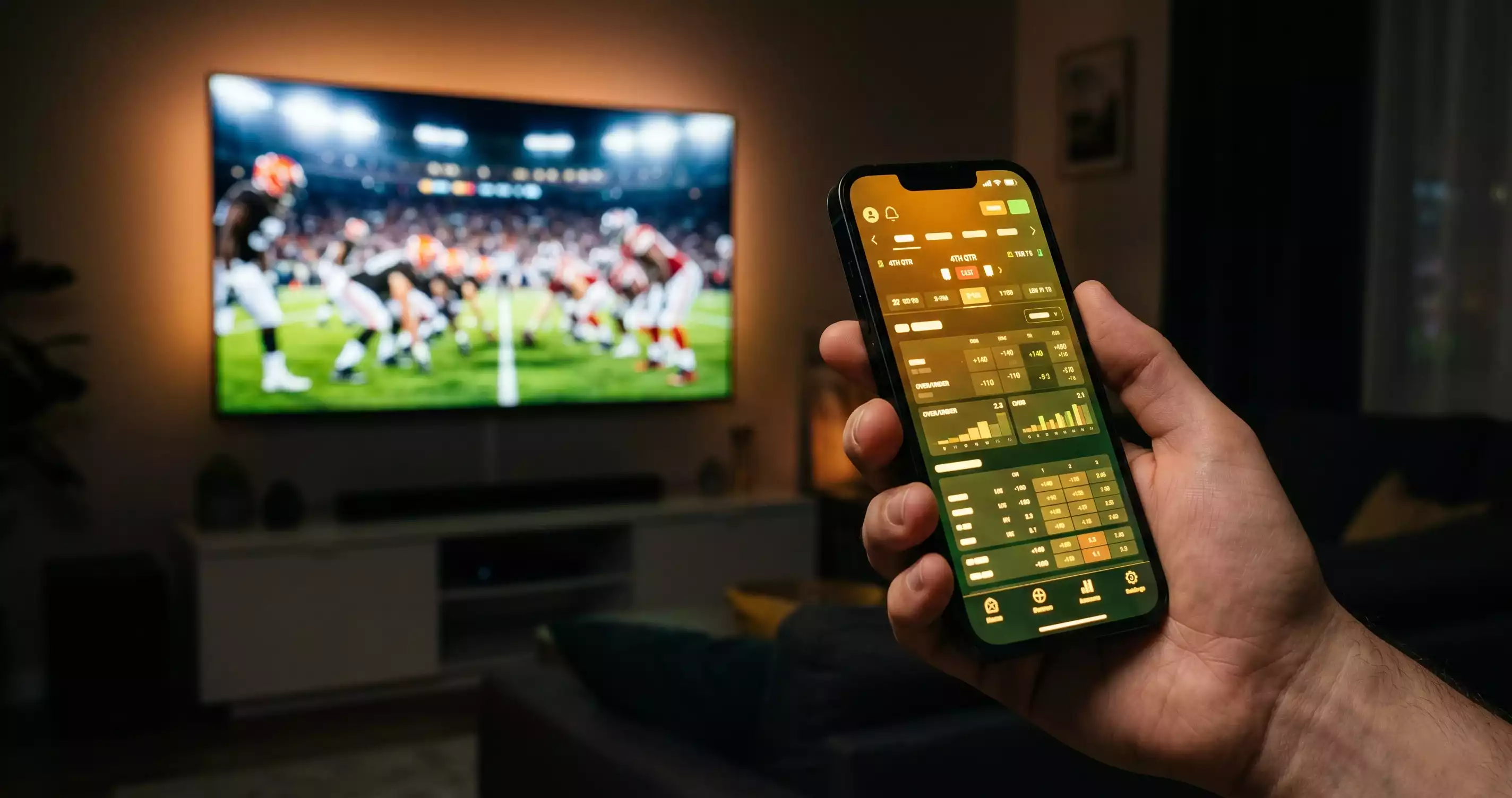
Mobile performance is the third pillar. With 78% of all online sports bets placed on mobile devices globally, the live betting interface on your phone is the interface that matters. Test for lag, button responsiveness, and whether the bet slip loads fast enough to capture the line you tapped. A platform that works flawlessly on desktop but stutters on mobile is functionally broken for live NFL betting, especially for UK users watching late-night games from bed or the sofa.
Cash-out functionality during live play is the final consideration. Some crypto sportsbooks allow you to close a position mid-game at a dynamically calculated price. This feature turns a live bet into something closer to a tradeable position – you can lock in profit when a game is going your way or limit losses when momentum shifts. Not every platform offers it, and the ones that do vary in how aggressively they price the cash-out option. A platform that offers cash-out at 85% of fair value is meaningfully different from one that offers it at 95%.
Frequently Asked Questions
Do crypto sportsbooks offer the same range of in-play NFL markets as traditional bookmakers?
The range varies by platform, but the leading crypto sportsbooks now match or exceed UKGC-licensed bookmakers in live NFL market depth. Drive-result bets, next-play props, and quarter-specific lines are common on established crypto platforms. Smaller or newer operators lag behind, so checking live market coverage during preseason games is the best way to evaluate before committing funds.
How do blockchain confirmation times affect the odds I get on a live NFL bet?
They don’t – if you’ve pre-funded your account. Live bets execute from your internal sportsbook balance, not from a blockchain transaction. Confirmation times only matter during the deposit and withdrawal phases. The critical step is depositing before kickoff so your balance is available when in-play markets open.
Which NFL game situations create the best live betting opportunities?
Early-game scoring runs that shift the spread beyond what historical win-probability models support, halftime resets where coaching adjustments are underpriced, and shifts in play-calling approach after a team falls behind (increasing passing volume for trailing quarterbacks). Each requires watching the game rather than reacting to score alerts.
Is a pre-funded crypto wallet required for live NFL betting?
Effectively, yes. While you could theoretically deposit during a game, blockchain confirmation delays mean your funds may not arrive in time to capitalise on the opportunity you spotted. Every serious live bettor deposits before the game starts, treating the pre-funded balance as their in-play bankroll for the session.
Speed as a Skill, Not Just a Feature
Live NFL betting with crypto strips away the convenient fiction that blockchain technology automatically makes everything faster. It doesn’t. What it does is shift the timing. The speed advantage of crypto – fast deposits without bank processing delays, rapid withdrawals without five-day clearing periods – belongs to the edges of the transaction. The live betting itself runs on the same server infrastructure as any other sportsbook.
The bettors who thrive in live crypto NFL markets are the ones who treat preparation as the main event. Fund the account before kickoff. Know your strategies before the opening snap. Set a limit on how many live bets you’ll place per game. Watch the game rather than the odds feed, because the edge in live betting comes from understanding what’s happening on the field faster than the market can reprice it.
In-play betting now accounts for the majority of global sports wagering volume, and that share is growing at nearly 15% per year. For UK bettors watching NFL games during the late evening and early morning hours, the reduced competition from casual bettors can create pockets of value that don’t exist during peak US betting windows. The combination of crypto’s operational efficiency and live betting’s analytical demands rewards the same trait: discipline. Speed without discipline is just faster losing. But discipline paired with the structural advantages of crypto – faster capital cycles, no banking restrictions, seamless cross-border access to the deepest NFL markets – creates a toolkit that didn’t exist five years ago. The question is whether you use it with the precision it demands.
Published by the Best nfl Crypto Betting team.